Powerhouse Kjørbo, Bærum
2020.11.20 09:54
Powerhouse Kjørbo has become Norway’s first energy-positive office building and is probably the world’s first energy-positive refurbished building.
Developer
Entra Eiendom
Municipality
Bærum
Architect
Snøhetta
Costs and support
Project support Enova: Approx. 15,9 MNOK
Status
Completed (2014)
Project description
Powerhouse Kjørbo consists of two ordinary office blocks from the 1980´s that have been transformed to an up-to-date and modern office facility. The goal over the lifetime of the buildings is to produce more energy than they use. With help of photovoltaics Powerhouse Kjørbo will produce over 200 000 kWh per year. The electricity will be delivered to the technical systems of the building and in periodically also to the local grid.
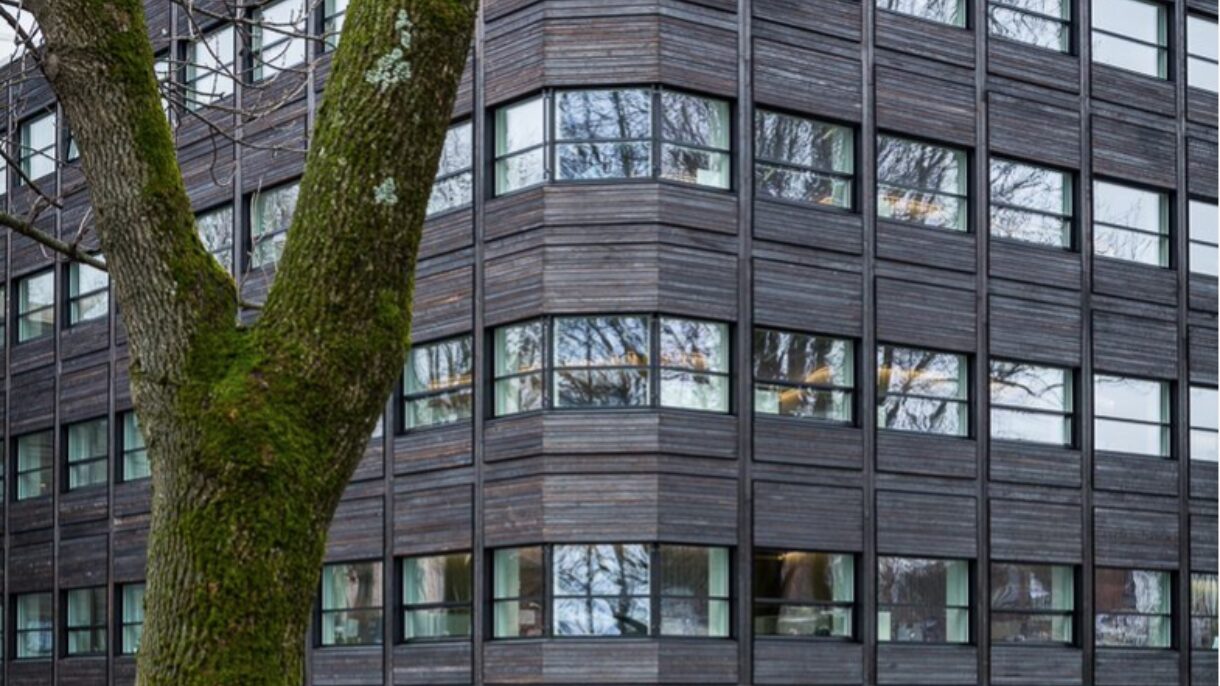
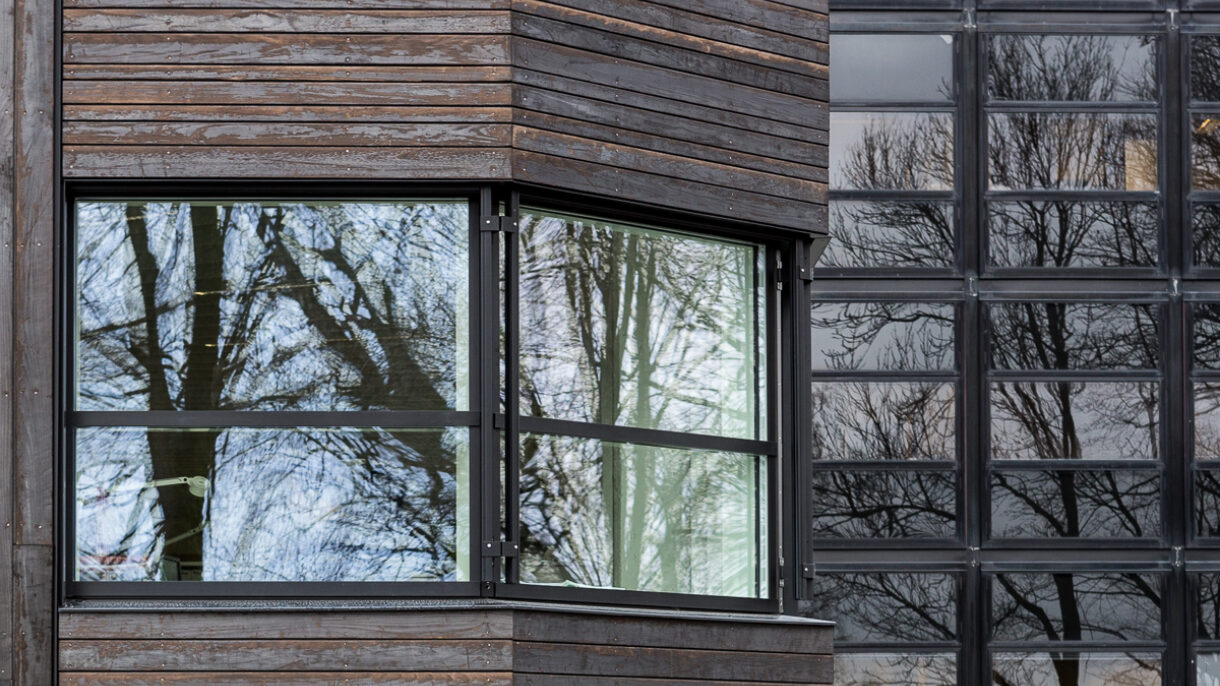
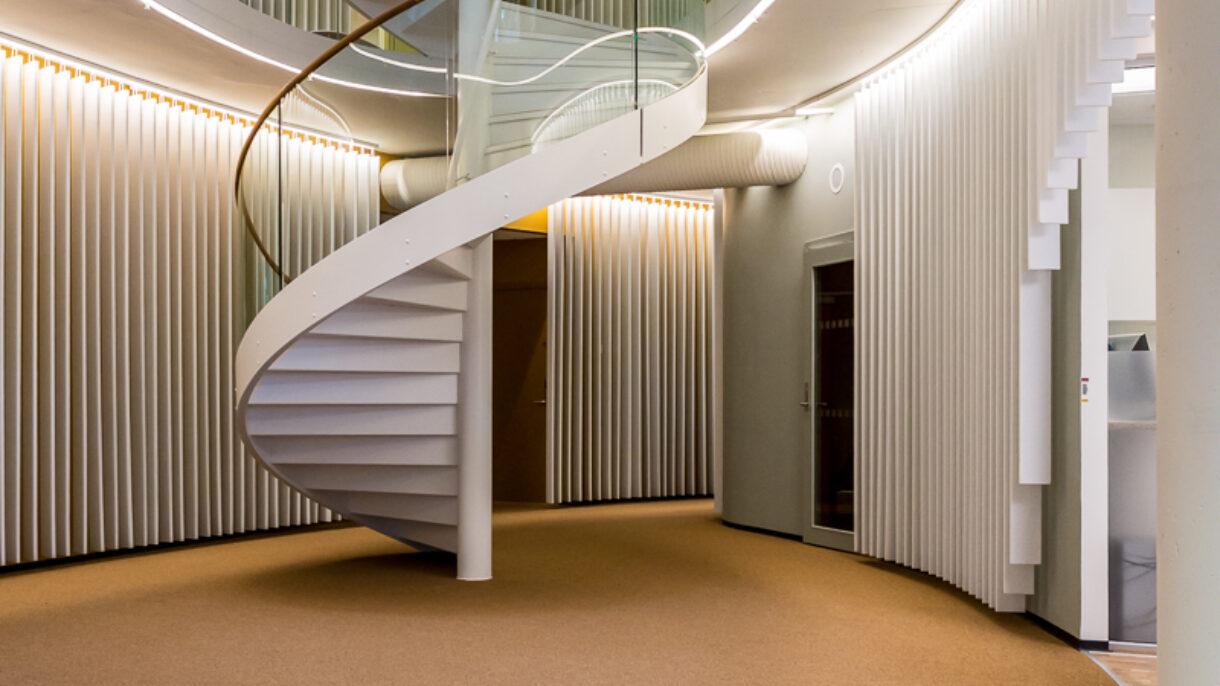
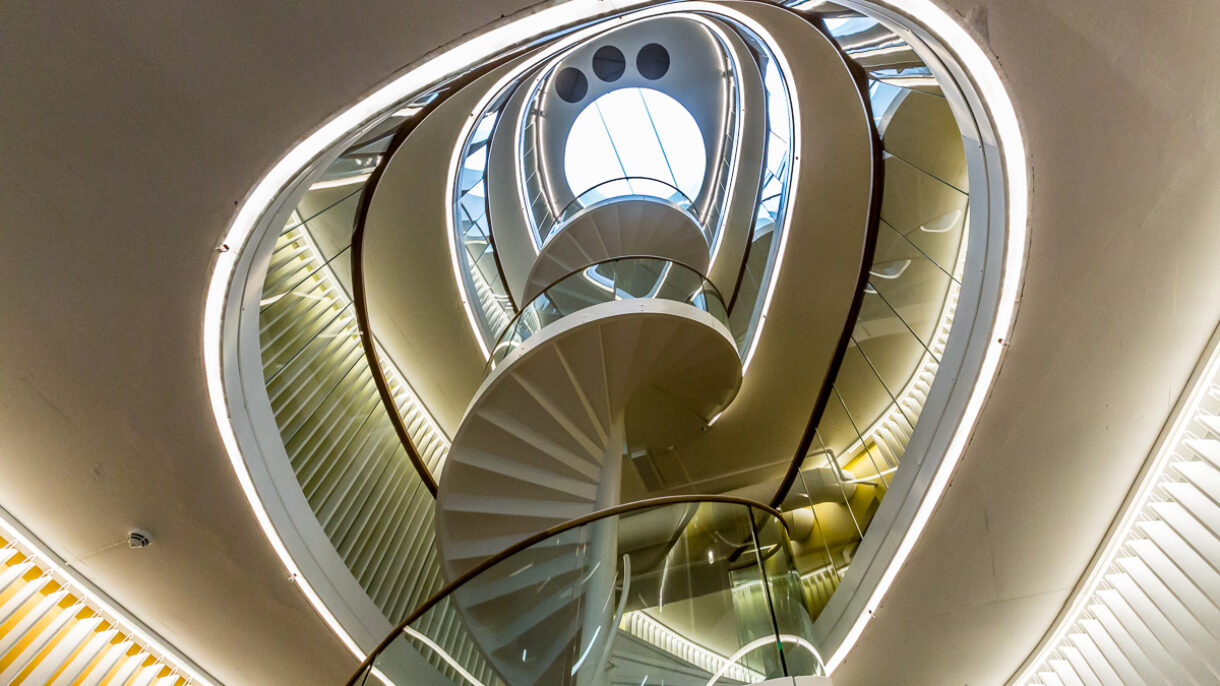
At the outset of this process the city council expressed a requirement for the building to retain its original appearance. The black cubes had to continue to be black cubes after the rehabilitation of the building, and the white, curved staircases that connect the buildings also needed to be retained. Window openings between the columns in the façade were also retained, but with a slightly different format to optimise daylight. Exterior solar screening consists of a black zip screen that it is possible to see through. The glass panes that were previously used as a façade material have been replaced with burned aspen, which is much better for embodied energy than glass. The window profiles and edges are lacquered black.
The park around the building was listed in the course of the building process, and will be returned to its original grass and gravel pathways. The space between the buildings was upgraded with beds where ten new plant varieties are introduced. The entrance and access situation is as before, but an upgraded and extended bicycle-parking building has been built adjacent to the entry area. A new door and stair give the users of the building a direct access to the park.
The interdisciplinary design process has contributed to new and innovative solutions. The building project received BREEAM-NOR Outstanding certification at the design phase. Powerhouse Kjørbo is the first project that the Powerhouse cooperation has completed, and the first time a building has being rehabilitated as a plus house. The method can easily be transferred to other office buildings.
You can also read about Powerhouse Kjørbo in the booklet “Think twice before demolishing. Advice on carrying out a successful construction project without demolition” made by Norwegian Green Building Council (page 15).
Low carbon strategies
Combining extreme energy performance with good indoor air quality, low environmental impact and robust solutions, all on a commercial basis, demands another approach than in traditional building projects. The key to success lies in integrated, holistic solutions. The most important initiatives for achieving low energy use and low greenhouse gas emissions are:
Energy concept based on integrated and holistic solutions
Good insulation values, low air-leakage and a lot of daylight
Extensive utilisation of thermal mass
Effective solar screening
Energy efficient lighting controlled by sensors according to daylight and presence
Controlling technical equipment consumption
Energy efficient and building-integrated ventilation solution
Thermal energy supply based on energy wells, heat pumps and use of excess heat from server facilities, optimised according to heating and cooling requirements
A large photovoltaic system
Materials with low embodied energy, such as external cladding of burnt wood, reuse of façade panels in glass and so on…
Comprehensive testing and commissioning of technical systems
Training of maintenance personnel, and careful follow-up of daily energy use
Facilitating increased bicycle and electric car use
The energy systems (heating, ventilation, cooling and lighting) are designed to be used only when needed, and the number of sensors and control units is limited to a minimum. The users can control the internal climate themselves by opening windows, and they can also control the solar screening on the windows. The primary energy calculation over the 60 year life of the building results in a surplus of about 200 kWh pr. m² heated area. The calculation uses realistic rather than standardised operating data. Delivered energy, excluding technical equipment, is calculated to about 20 kWh/m² year. A comprehensive job was done to document the embodied energy of the project.
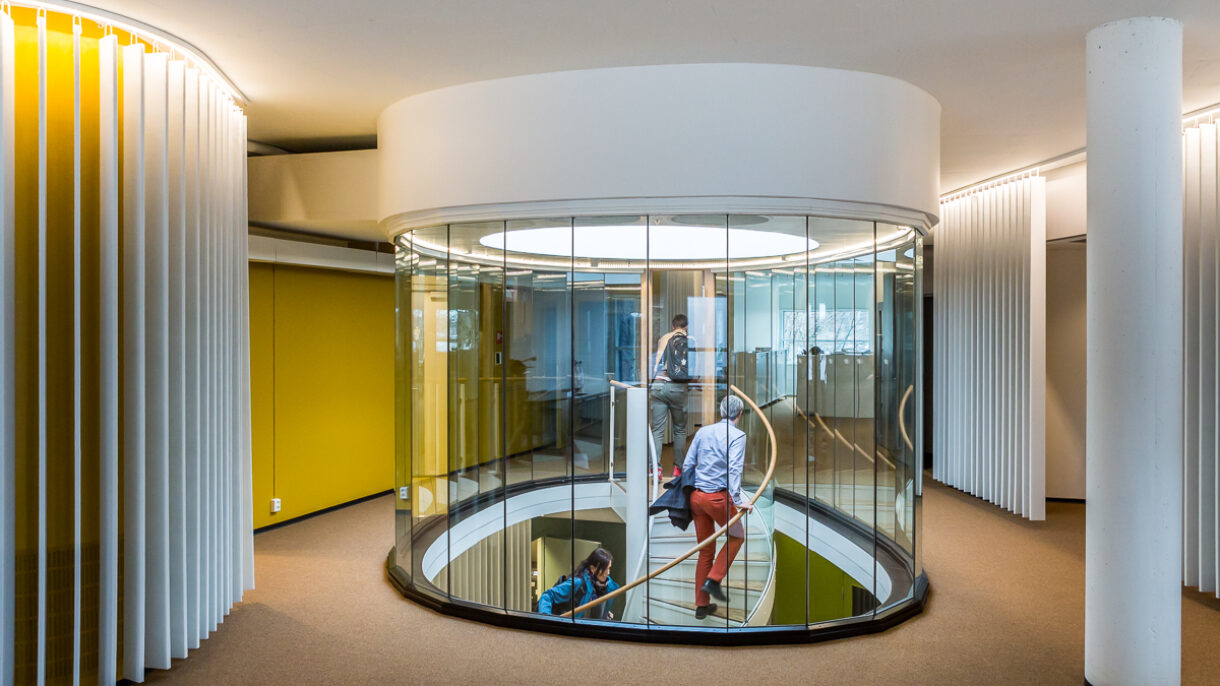
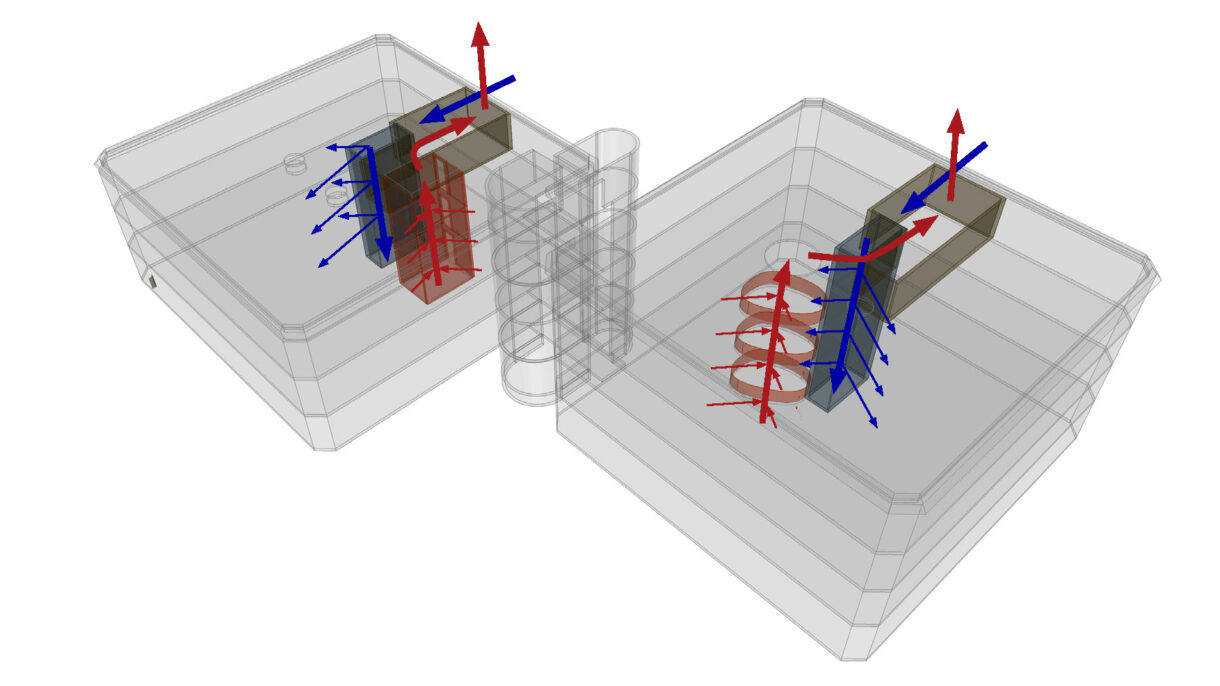
Exposed concrete absorbs heat and releases it again when it becomes cooler. 40 percent of the roof of the building had to be exposed to control temperatures, and a major challenge was to develop a good acoustic environment without a suspended ceiling. This was solved by using suspended baffles on the ceiling in addition to acoustic dampening fins around the central cores. The fins and baffles are maid of recycled plastic bottles. The core wall is designed as a curved waveform, among other reasons because it traps noise and creates calm zones in the open office landscape. Ventilation supply ducts are hidden in the waves, and radiators are hung on the core walls. This allowed the project to minimise technical installations where there are exposed ceilings. The facades are clad with charred wooden panels, which are almost maintenance free and fulfil requirements for low embodied energy.
The project lies centrally in Sandvika, which is a public transport hub in Bærum district. Bicycle parking and changingrooms are provided. The project has charging stations for electric cars in the carpark and outside in the local area.
Environmental Measures
Bymiljø og arkitektur
Det var et krav fra kommunen om at det opprinnelige uttrykket som karakteriserte Kjørbo skulle bestå. De sorte kubene skulle fortsatt være sorte kuber også etter rehabilitering, og de hvite, buede trapperommene som forbinder byggene skulle bevares. Vindusåpningene mellom søylene i fasaden er opprettholdt, men med et litt annet format for å optimalisere dagslys. Utvendig solavskjerming består av en sort zipscreen som det er mulig å se gjennom. Glassplatene som tidligere ble benyttet som fasademateriale er erstattet med panel av brent osp, som er langt bedre på bundet energi enn glass. Vindusprofiler og beslag er sortlakkert.
Parken rundt byggene fikk fredningsstatus i løpet av byggeprosessen, og ble tilbakeført med opprinnelig plen og grusveier. Mellomrommet mellom husene blir oppgradert med bed der ti nye plantesorter ble introdusert (BREEAM-krav). Inngangsparti og atkomstsituasjon er som før, men et oppgradert og utvidet sykkelparkeringshus er oppført i tilknytning til atkomstområdet. En ny dør og trapp gir brukerne av bygget en ny atkomst til parken.
Klimagassutslipp
Å kombinere ekstrem energiytelse med godt innemiljø, lav miljøbelastning og robuste løsninger på kommersielle vilkår, krever en annen tilnærming enn i tradisjonelle byggeprosjekter. Nøkkelen til å lykkes ligger i integrerte, helhetlige løsninger. Det krever samhandling, spisskompetanse og helhetstenking. ”Less is more” er et kjent begrep, men for å oppnå ”mer” med ”mindre” kreves tverrfaglig kunnskap. Eksempelvis er et viktig poeng med kunnskap om teknikk ikke å bruke mer av den, men å bruke mindre – og ikke minst riktige tekniske løsninger for å oppnå et enda bedre resultat. Det gjenspeiles i de teknologiske konseptvalgene som er gjort i prosjektet.
De viktigste tiltakene for å oppnå lavt energibehov og lave klimagassutslipp er:
- Energikonsept basert på integrerte og helhetlige løsninger
- God varmeisolasjon, lite luftlekkasjer og mye dagslys
- Utstrakt utnyttelse av termisk masse
- Effektiv solavskjerming
- Energieffektiv belysning med styring etter dagslys og tilstedeværelse
- Styring av brukerutstyr
- Energieffektiv og bygningsintegrert ventilasjonsløsning
- Termisk energiforsyning basert på energibrønner, varmepumper og spillvarme fra dataserveranlegg, optimalisert etter varme- og kjølebehov
- Stort solcelleanlegg
- Valg av materialer med lav bundet energi, som utvendig kledning av brent tre, gjenbruk av fasadeplater i glass, m.m.
- Omfattende funksjonstesting av tekniske anlegg
- Opplæring av driftspersonell, og nøye oppfølging av energibruk i drift
- Tilrettelegging for sykling og elbiler
Areal og transport
Bygget ligger lokalt i Sandvika, som er et kollektivknutepunkt i Bærum. Det er tilrettelagt for sykkelparkering og garderober. Anlegget har ladestasjoner for elbiler i P-hus og ute på området.
Energi
Energisystemene (varme, ventilasjon, kjøling og belysning) er planlagt med fokus på at det kun skal brukes energi når det er et reelt behov, samtidig som antall sensorer og styringsenheter begrenses til et minimum. Brukerne kan selv kontrollere inneklimaet med vinduslufting, og de kan også styre solavskjermingen. Primærenergiregnskapet over livsløpet (60 år) viser et overskudd på ca. 200 kWh pr. m² oppvarmet areal. Energibudsjettet for driftsperioden tar utgangspunkt i realistiske driftsdata. Spesifikt behov for levert energi, eksklusiv utstyr, er beregnet til ca. 20 kWh/m² år. Det er gjort en omfattende jobb for å dokumentere bundet energi for prosjektet.
Konstruksjoner og materialbruk
Eksponert betong absorberer varme og avgir varme når det blir kjølig. 40 prosent av himlingen i bygget måtte være eksponert. Utfordringen har vært å skape et godt akustisk innemiljø uten nedhengt himling. Det er løst med nedhengte baffler i himlingen i tillegg til akustisk dempende lameller rundt bølgeveggene. Lamellene og bafflene er laget av gjenbrukte plastflasker. Kjerneveggen er utformet som bølgevegg, blant annet for å fange opp lyd og for å skape rolige soner i det åpne kontorlandskapet. Inne i buene er ventilasjonsventilene skjult. Radiatorer er også hengt på kjerneveggene. Der hvor det er åpne himlinger kan man derfor minimalisere tekniske føringer. Den økte romhøyden uten nedhengte himlinger gir en ekstra kvalitet. I fasadene er det brukt forkullede trepaneler som er nær vedlikeholdsfrie og som ivaretar krav om lav bundet energi. Bundet energi er den energien som har gått med til materialtilvirking og transport.
Key Figures
AREA COVERAGE
5180 m² (Net area) for 225 fulltime staff.
| Area BRA | 5200 m2 |
| Number of residents/users | 225 |
GREENHOUSE GAS ACCOUNTING
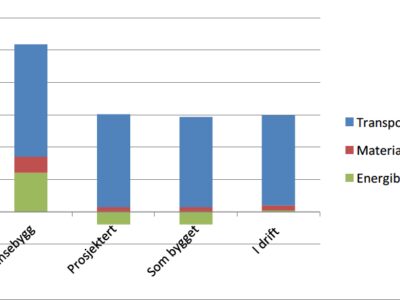
| Reference | Project | Done | Operates | |
| Energy | 12,1 | -3,9 | -3,9 | 0,5 |
| Material use | 5 | 1,5 | 1,5 | 1,5 |
| Transportation | 34,7 | 28,7 | 27,8 | 27,8 |
ENERGY
| Energy sources: | Photovoltaics (electricity), heat pump water-water (energy wells for cooling and heating). Heat pumps cover 100% of load, also DHW (separate heat pump). Heat pump water-water (waste heat from server room used for heating), district/ local heating system (backup in case of heat pump failure). |
ENERGY BUDGET
| Space heating: | 4,9 kWh/m2/year |
| Plumbing: | 1 kWh/m2/year |
| Hot water: | 1,4 kWh/m2/year |
| Fan operation: | 2,3 kWh/m2/year |
| Pump operation: | 1,6 kWh/m2/year |
| Lighting: | 7,7 kWh/m2/year |
| Technical equipment: | 12 kWh/m2/year |
| Ventilation cooling: | 0,2 kWh/m2/year |
| Other energy items: | 18 kWh/m2/year |
TRANSPORTATION
| Distance to center: | 500 m |
| Nearest welding mac. koll.knutepkt: | 500 m |
| Parking: | 1,45 (Pr. 1000 m2) |
| 0,33 (Pr. Unit/arb.plass) | |
| Bicycle Parking: | 1,34 (Per 1000 m2) |
| 0,31 (Pr. Unit/arb.plass) |
COSTS AND SUPPORT
Project support Enova: Approx. 15,9 MNOK
Project Information
PROJECT DETAILS
| Address: | Kjørboveien 18 - 20 |
| Municipality: | Bærum |
| Project period: | 2012 - 2014 |
| Status: | Completed (2014) |
| Project type: | Reuse / rehabilitation / transformation |
| Function / Building type: | Office building |
| Environmental standard: | BREEAM Outstanding, Passive house standard, Plus energy building |
| Exemplar Program: | FutureBuilt |
| Competition Form: | Direct commission |
| Contract practice: | Design and build contract |
PROJECT TEAM
| Client: | Entra Eiendom AS |
| Architect: | Snøhetta as |
| Project Management (PM) | Aase Byggeadministrasjon AS |
| Special Adviser energy: | Skanska Norge AS |
| Counselors: | Itech (belysning), Snøhetta AS (INT, LARK), Asplan Viak (RIB, RIV, RIE, RIBfy, RIBr, RIAku) |
| Main contractor: | Skanska Norge AS |
Map
Map